What Is an EV Charging Station and How Does It Work?
What Is an EV Charging Station?
An EV charging station — also called an EVSE (Electric Vehicle Supply Equipment) — is an infrastructure device that supplies electric energy for recharging electric vehicles. Think of it as a "fuel pump" for electric cars, except instead of gasoline, it delivers electricity directly to your vehicle's onboard battery.
EV charging stations can be found in a variety of locations: public parking lots, shopping centres, highway rest stops, workplaces, and even private homes. With the rapid expansion of the EV market, the global charging network has grown to over 2.7 million public chargers worldwide as of early 2026.
🔌 Quick Fact: The first public EV charging station in the modern era was installed in San Carlos, California in 2010. Today, there are over 1 million stations across North America alone.
How Does an EV Charging Station Work?
At its core, an EV charging station converts alternating current (AC) from the electrical grid into a form your vehicle can use. Here's a simplified breakdown of the process:
- Grid Connection — The station is connected to the local electrical grid, drawing AC power.
- Power Conversion — Depending on the charger type, the AC power is either passed directly to the vehicle's onboard charger (Level 1 & 2) or converted to direct current (DC) by the station itself (DC Fast Charging).
- Communication Protocol — The station communicates with the vehicle's Battery Management System (BMS) to determine the optimal charging rate, voltage, and current.
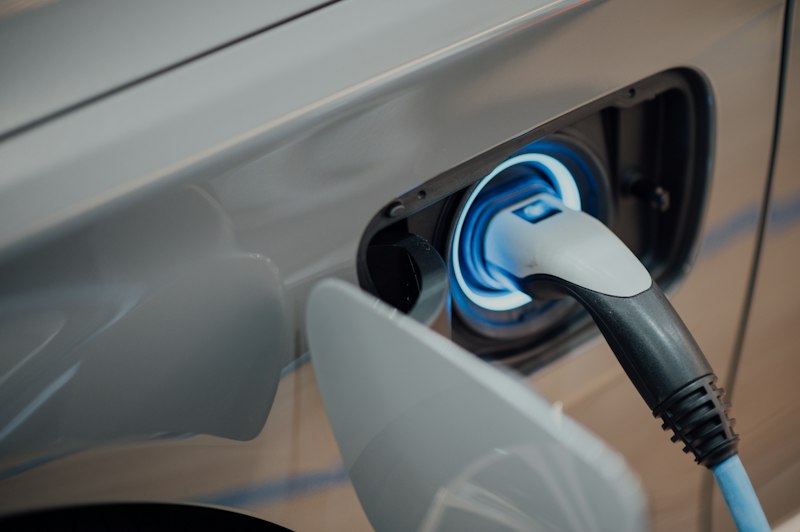
- Energy Transfer — Electricity flows through the charging cable and connector into the vehicle's battery pack.
- Monitoring & Safety — Throughout the session, both the station and vehicle monitor temperature, voltage, and current to ensure safe operation.
The Key Components of a Charging Station
| Component | Function |
|---|---|
| EVSE Controller | Manages the charging session, authentication, and billing |
| Power Module | Converts and regulates electrical power |
| Connector/Plug | Physical interface between charger and vehicle |
| Communication Module | Enables network connectivity, app control, and payment |
| Safety Systems | Ground fault protection, overcurrent protection, thermal management |
| Display/Interface | Shows charging status, cost, and session information |
Types of EV Charging Stations
There are three main levels of EV charging, each with different power outputs and use cases:
Level 1 Charging (120V AC)
- Power Output: 1.2–1.8 kW
- Charging Speed: ~5–8 km of range per hour
- Best For: Overnight home charging, emergency top-ups
- Equipment: Standard household outlet — no special installation needed
Level 2 Charging (240V AC)
- Power Output: 3.3–19.2 kW
- Charging Speed: ~25–50 km of range per hour
- Best For: Home charging, workplace charging, shopping centres
- Equipment: Dedicated 240V circuit with EVSE unit
DC Fast Charging (DCFC)
- Power Output: 50–350+ kW
- Charging Speed: ~250–1,200 km of range per hour
- Best For: Highway travel, quick top-ups, commercial fleets
- Equipment: Industrial-grade power conversion equipment
⚡ Pro Tip: Use our Interactive Charging Map to find all three types of chargers near you, filtered by power output and connector type.
Connector Types Explained
Different regions and manufacturers use different connector standards. Here's a comparison:
| Connector | Type | Region | Max Power |
|---|---|---|---|
| J1772 (Type 1) | AC | North America | 19.2 kW |
| Type 2 (Mennekes) | AC | Europe | 43 kW |
| CCS1 | DC | North America | 350 kW |
| CCS2 | DC | Europe | 350 kW |
| CHAdeMO | DC | Japan (global) | 100 kW |
| NACS (Tesla) | AC/DC | North America | 250 kW |
| GB/T | AC/DC | China | 250 kW |
As of 2026, the NACS connector (originally Tesla's proprietary plug) has been adopted by most major automakers in North America, making it the emerging standard alongside CCS.
How to Use an EV Charging Station
Using a public charging station is straightforward:
- Locate a Station — Use apps like EV Car Charge Stations to find nearby chargers with real-time availability.
- Park & Connect — Pull into the charging spot and plug the connector into your vehicle's charge port.
- Authenticate — Tap your RFID card, scan a QR code, or use an app to start the session. Some stations accept contactless credit cards.
- Monitor Your Charge — Track your charging progress on the station display, in-car screen, or the charging network's app.
- Unplug & Go — Once you've reached your desired charge level, end the session, unplug, and drive away.
💡 Did You Know? Many new EVs can precondition their batteries while driving toward a fast charger, significantly reducing charging time. Check your vehicle's navigation system for this feature.
The Charging Network Ecosystem
Public charging stations are typically operated by charging networks — companies that install, maintain, and manage the stations. Some of the largest networks include:
- Tesla Supercharger — The largest fast-charging network globally, now open to non-Tesla vehicles
- ChargePoint — The largest independent network in North America
- Electrify America — Focused on DC fast charging along highways
- FLO — Canada's largest charging network
- Ionity — Europe's high-power charging network
Explore all available networks and compare their pricing on our Charging Networks page or check current charging prices reported by the community.
Smart Charging Features
Modern EV charging stations come equipped with intelligent features:
- Load Management — Distributes power efficiently when multiple vehicles charge simultaneously
- Scheduled Charging — Allows you to set charging times to take advantage of off-peak electricity rates
- Solar Integration — Some stations pair with solar panels for renewable energy charging
- Vehicle-to-Grid (V2G) — Emerging technology that lets your EV send power back to the grid during peak demand
- Remote Monitoring — Station operators can diagnose and resolve issues remotely
What's Next for EV Charging?
The future of EV charging is rapidly evolving. Key trends to watch include:
- Ultra-fast charging stations delivering 500+ kW, enabling a full charge in under 10 minutes
- Wireless (inductive) charging pads embedded in roads and parking spaces
- Battery swapping stations that replace depleted batteries in minutes
- Autonomous charging robots that connect and disconnect charging cables without human intervention
- Megawatt Charging System (MCS) for electric trucks and heavy-duty vehicles
The EV charging landscape is transforming rapidly. Stay informed with the latest developments on our News page and find your nearest charging station on our Interactive Map.
Looking for charging stations near you? Browse our city guides or use the EV Charging Map to find the closest charger to your location.